
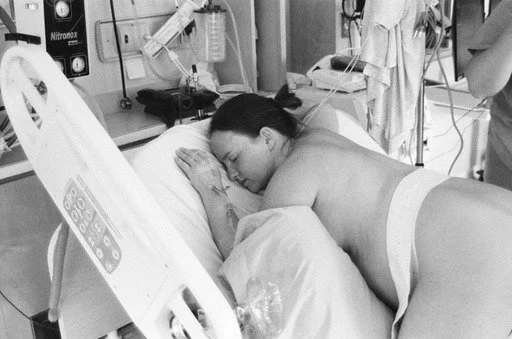
Fetal Monitoring: Navigating Technology for a Mindful Birth
Intermittent Auscultation (IA): The Gold Standard for Low-Risk Birth
For healthy, spontaneous labours, the Society of Obstetricians and Gynaecologists of Canada (SOGC) recommends Intermittent Auscultation. This means your nurse or midwife listens to the baby’s heart periodically using a handheld Doppler.
Intermittent monitoring may also be done using Electronic Fetal Monitoring (described below). This involves strapping two monitors to the belly for period of 15-30 minutes at a time.
Monitoring your baby’s heart rate is a standard part of hospital birth, but "how" it’s done can significantly impact your mobility and comfort. Whether you are birthing at RVH in Barrie, CGMH in Collingwood, or HHCC in Orangeville, understanding your options is the first step to an empowered experience.

Continuous Electronic Fetal Monitoring (EFM)
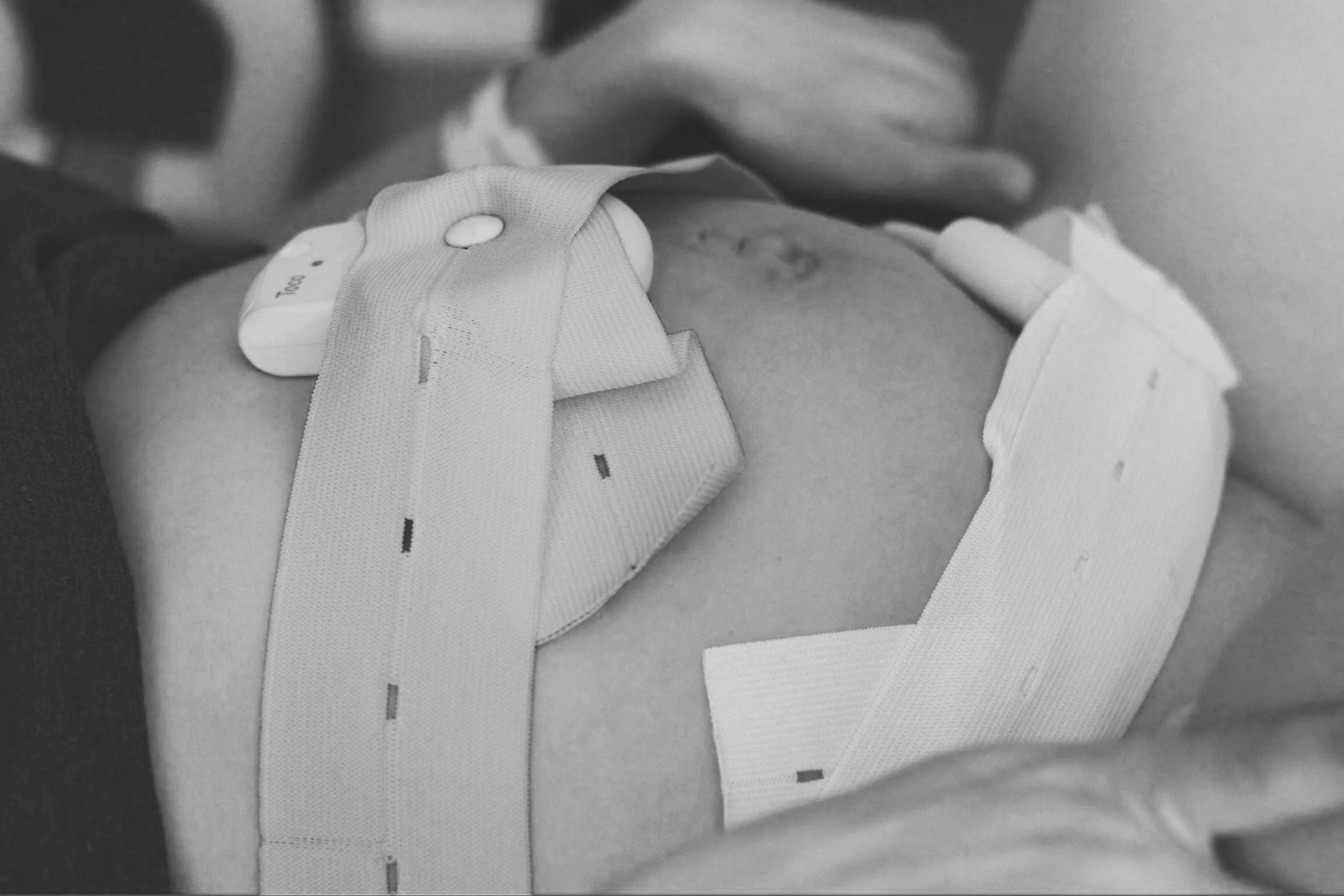
EFM involves two elastic belts around your abdomen: one (the ultrasound transducer) for the baby’s heart rate and one (the tocodynamometer) for your contractions. This is typically required if you have an induction, an epidural, or certain high-risk factors.
Doula Tip: ask for wireless or waterproof sensors if you are using intermittent EFM so you can move freely and use the tub/shower as desired.
Hospital-Specific Insights: Tech & Tools in Our Area
Collingwood General & Marine Hospital (CGMH)
At CGMH, the Labour & Delivery rooms are equipped with wireless, waterproof fetal heart rate monitoring.
The Doula Advantage: This is a game-changer! It means that even if you require continuous monitoring (such as during a Pitocin induction), you can still utilize the bathtubs and showers in your room. I help you stay mobile and utilize various labour positions (including using a birth ball) while the "telemetry" monitors the baby.
Royal Victoria Regional Health Centre (RVH) - Barrie
RVH is a high-volume unit where EFM is common, especially in their triage unit.
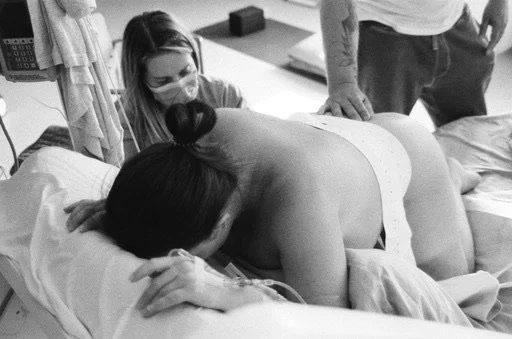
The Doula Advantage: If your tracing is "reassuring," I can help you advocate for intermittent breaks from the monitor (usually 20–30 minutes) so you can walk the halls or use a birth ball, preventing you from being "tethered" to the bed. I can also help you navigate positions in the bed using a peanut ball if you are required to labour in bed for a period of time.
Headwaters Health Care Centre (HHCC) - Orangeville
HHCC emphasizes family-centred care and supports Intermittent Auscultation for all low-risk births.
The Doula Advantage: I work alongside the HHCC staff to ensure that mindful birth principles and nervous system regulation are respected even when monitors are in use, keeping the environment calm and family-centred.
Want to build a birth plan that addresses your monitoring preferences?
Whether you are plan on having a homebirth with Nottawasaga Midwives, delivering at Collingwood General & Marine Hospital or RVH in Barrie, a birth plan not only helps you self-advocate; it helps you understand your options no matter which course your labour takes!
At Doula by the Bay, I offer expert Certified Childbirth Educator led prenatal classes in your home to help your prepare for a homebirth or hospital birth at CGMH, RVH or HHCC. Whether you would like to hire an experienced birth doula or book a private 1:1 in-home childbirth class, we are here for you.
Contact us for a free 30-minute phone or video consultation.
Frequently Asked Questions
-
An Internal Fetal Scalp Electrode (FSE) is a small wire placed on the baby's head to get a more accurate reading. This is sometimes suggested at RVH or HHCC if the external "belts" are sliding or failing to pick up a clear heart rate (common during active movement or certain maternal positions). I help you understand the "why" behind this suggestion so you can provide informed consent, ensuring the goal remains a safe and regulated labour for both you and your baby.
-
Not at all! Whether you are at RVH, CGMH, or HHCC, I am an expert at "cable management." We use Yoga for Birth techniques to keep you mobile. If a belt slips while you are on the birth ball, I am right there to help the nurse readjust it so your movement—and your baby's descent—isn't interrupted.
If your nurse is having a tough time picking up your baby’s heart tones on the monitors, I help you get creative with positions such as side-lying with a peanut ball or even Spinning Babies techniques to help baby move into a better position.
-
Evidence suggests that routine continuous EFM in low-risk pregnancies can lead to higher rates of surgical intervention (C-sections and forceps) without necessarily improving outcomes for the baby. This is why I help you understand your "right to informed refusal" or the option to request intermittent monitoring if your labour is uncomplicated.
I also help you and your nurse to “get creative” with labour positions that promote fetal descent and rotation while also facilitating continuous monitoring (if require and consent is given).