
The Golden Minutes:
A Guide to Delayed Cord Clamping for Ontario Families
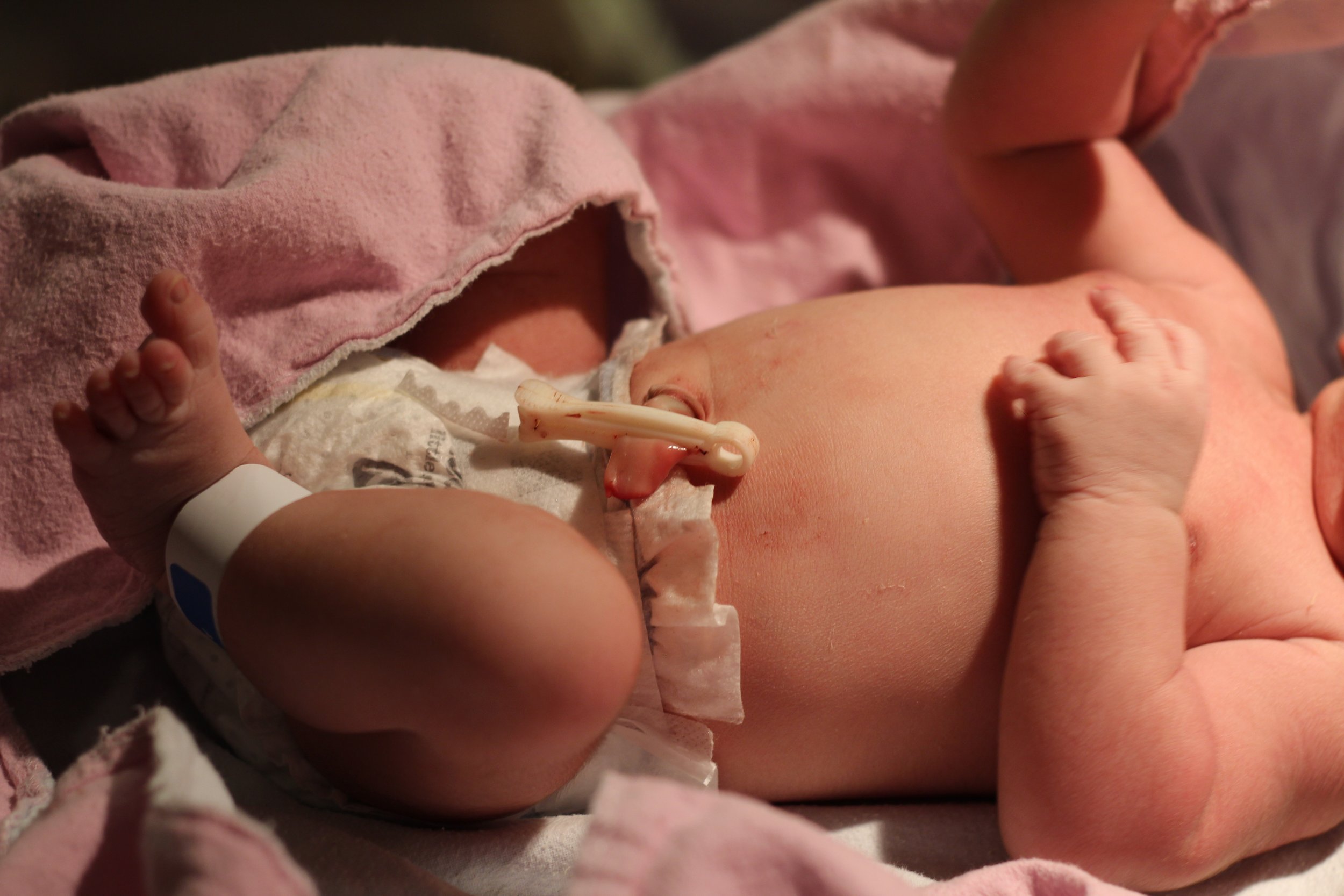
One of the most powerful ways to support the “physiologic transition” — that sacred window immediately after birth where a baby moves from receiving oxygen via the placenta to breathing on their own — is through delayed cord clamping (DCC). For families working with a doula in Collingwood, Barrie, or Orangeville, understanding the evidence behind this practice is a vital part of informed birth planning.
What Does the Research Say?
Systematic reviews and meta-analyses (including robust data from Cochrane and the WHO) show that the umbilical cord is not just a tube—it is a life-support system that doesn't "turn off" the moment a baby is born.
Here is a breakdown of the benefits and risks based on the timing of that first "cut."
1 Minute: The "Safety" Baseline
At 60 seconds, the baby has already received roughly 80 mL of blood from the placenta.
The Benefit: Systematic reviews show this increases hemoglobin levels and prevents early iron deficiency.
The Status: This is the current "standard" for delayed clamping in most Ontario hospitals.
3 Minutes: The "Iron-Rich" Window
Waiting until the 3-minute mark allows for the transfer of approximately 100 mL of blood—nearly 30% of a baby's total blood volume.
The Benefit: Research indicates significantly higher iron stores for up to 6 months. Iron is critical for early brain development.
The Risk: Meta-analyses note a slight increase in neonatal jaundice. While jaundice may require phototherapy (light therapy), it is a manageable condition and doesn't outweigh the long-term hematologic benefits.
5 Minutes+: The "Neuro-Developmental" Goal
Waiting until the cord stops pulsating (often 5 minutes or longer) is the ultimate goal of "physiologic" clamping.
The Benefit: A landmark study found that children who had a 3-to-5-minute delay had higher scores in fine motor and social skills at four years of age compared to those clamped immediately.
The Protective Factor: This delay allows the transfer of hematopoietic stem cells, which play a role in organ repair and immune function.
Delayed Cord Clamping in Special Circumstances
Many parents in the Simcoe County and Dufferin County areas ask if DCC is possible during more complex births. The latest research says yes.
1. Preterm Births (Preemies)
For premature infants, DCC is a life-saving intervention. A 2023 meta-analysis of over 3,000 preterm infants found that waiting just 60 seconds to clamp the cord reduced hospital mortality by 32% and significantly lowered the risk of brain bleeds (intraventricular hemorrhage).
2. Cesarean Birth (C-Section)
Recent evidence confirms that DCC is safe during a C-section. Research shows it does not increase the risk of postpartum hemorrhage (PPH) or maternal blood loss. For families in Barrie or Collingwood planning a C-section, you can still advocate for a 60-second delay.
3. Low APGAR or Non-Vigorous Babies
Traditionally, if a baby needs help breathing, the cord is cut immediately. However, new research on Physiologically Based Cord Clamping (PBCC) suggests that providing resuscitation while the cord is intact acts as a "safety net," keeping the oxygen flow steady while the medical team supports the baby’s lungs.
Planning Your Birth in Collingwood, Barrie, and Orangeville
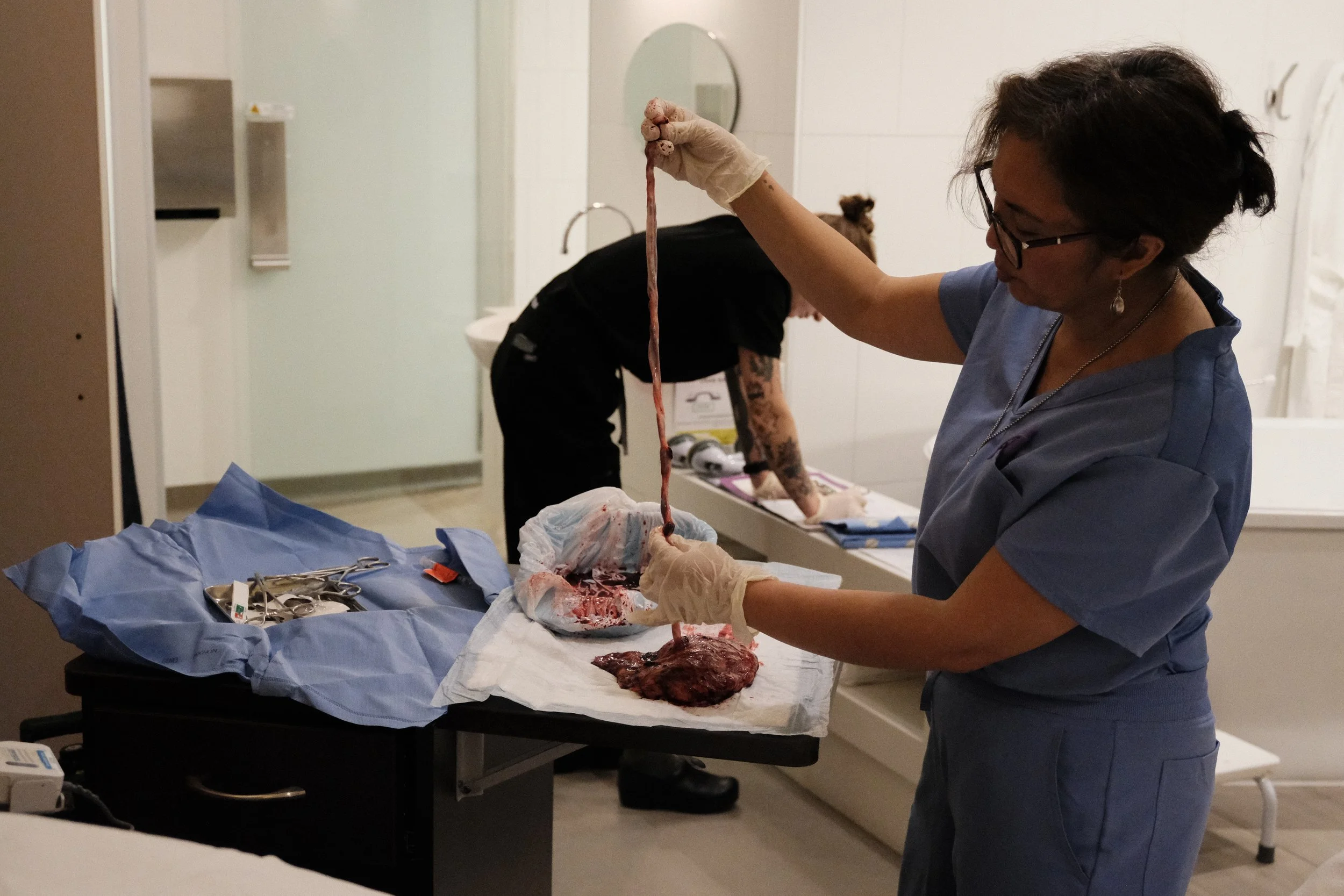
Whether you are birthing at Collingwood General and Marine Hospital, Royal Victoria Regional Health Centre (RVH), or Headwaters Health Care Centre, your doula can help you navigate these options.
Including "Delayed Cord Clamping for 3-5 minutes" in your birth preferences is a evidence-based way to give your baby a head start on iron stores and neurodevelopment.
Research Citations & Sources
For those who wish to dive deeper into the clinical data, here are the primary sources supporting these claims:
General Benefits & Jaundice Risk: Cochrane Library: Effect of timing of umbilical cord clamping of term infants on maternal and neonatal outcomes
Long-term Neurodevelopment (4-Year Follow-up): JAMA Pediatrics: Effects of Delayed Cord Clamping on Neurodevelopment at Age 4
Preterm Birth Survival (2023 Update): The Lancet: Deferred cord clamping, cord milking, and immediate clamping at preterm birth: a systematic review and individual participant data meta-analysis
C-Section Safety (Maternal Outcomes): American Journal of Perinatology: Maternal outcomes of delayed cord clamping during cesarean section
Physiologically Based Resuscitation: Resuscitation Journal: Providing newborn resuscitation with an intact umbilical cord