
Waterbirth Tips & Tricks:
Temperature & Safety Guide

The Deep Dive: Practical Tips & Tricks for a Successful Waterbirth
If you’ve decided that a "water epidural" is for you, preparation is the key to staying in that blissful labor flow. Transitioning from the concept of water as a healer to the practical application of a waterbirth requires a bit of "pool-side" strategy.
As a Waterbirth International trained doula serving Collingwood, Barrie, and Orangeville, I’ve helped many families navigate the logistics of the tub. Here is your go-to guide for making the most of your birth pool experience.
1. Perfecting the Temperature
Temperature management is the most critical safety factor in a waterbirth. If the water is too hot, the birthing parent can become dehydrated or tachycardic (elevated heart rate), which can also affect the baby’s heart rate.
During Labor: Keep the water between 36°C and 38°C (95°F – 98.6°F). This is generally considered the "comfort zone."
During Birth: As you approach the pushing stage, the water should be as close to maternal body temperature as possible, ideally 37°C (98.6°F).
The Trick: Always have a floating digital thermometer. Don’t rely on "feeling" the water with your hand—your perception changes during the intensity of labor!
Practicalities: Use a large bucket or bowl to “top up” the tub with hot water as needed, or to scoop out lukewarm water to make room for more hot water. Make sure to pour hot water away from the mother’s body.
2. Getting the Depth Right
For water to provide its full analgesic (pain-relieving) effect, you need to be buoyant.
The Rule of Thumb: The water should be deep enough to cover your belly entirely. This usually means a depth of at least 18 to 20 inches.
Safety First: Ensure the water does not go above your armpits when sitting. You need to be able to move freely without feeling like you are struggling to keep your head up.
Buoyancy is Key: If the water is too shallow, you lose the "weightless" benefit that helps your pelvis open and allows the baby to rotate.
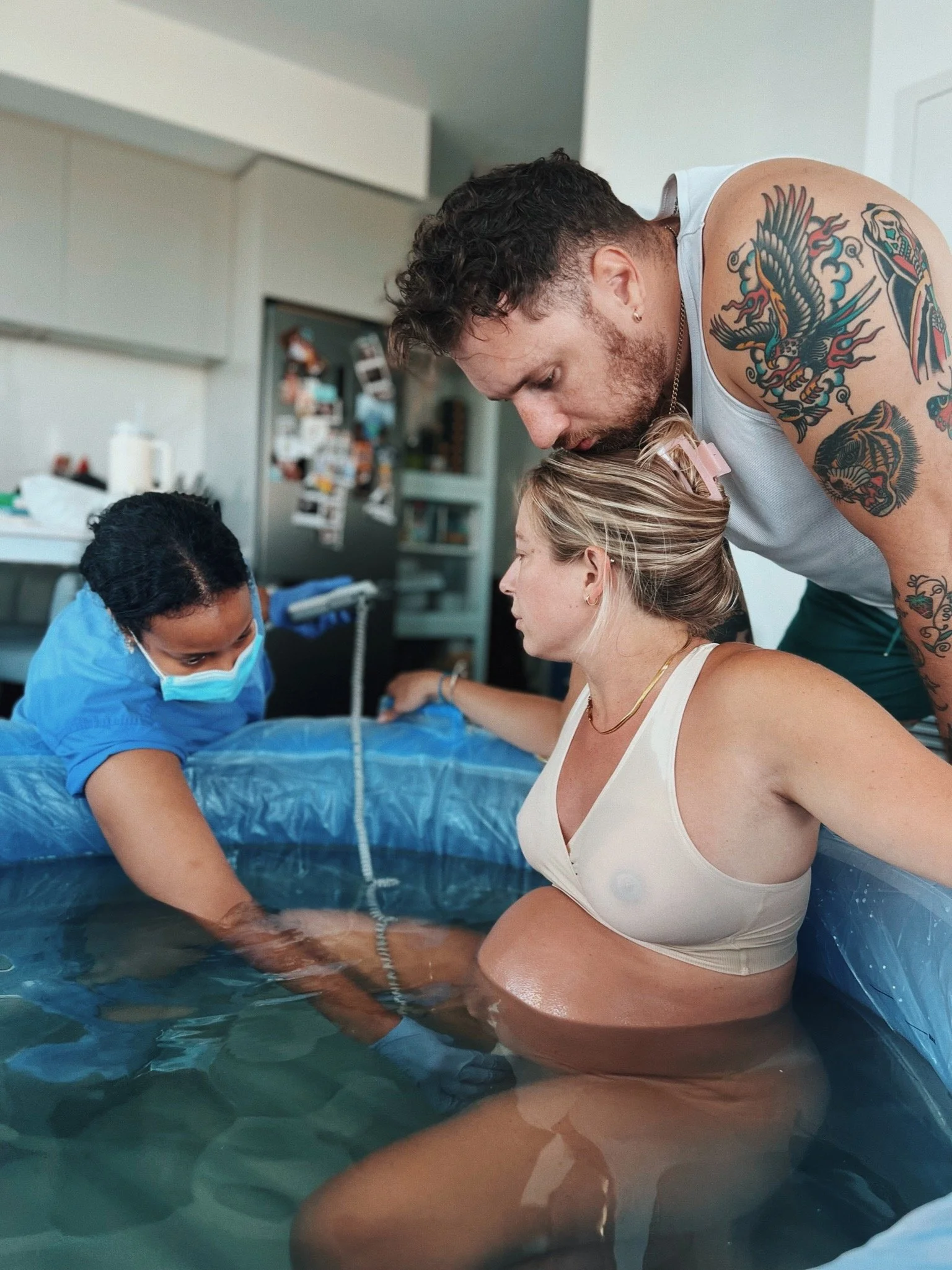
3. The "Golden Rule" of Bringing Baby to the Surface
One of the most common questions I get at Doula by the Bay is: "How does the baby breathe?" Newborns have a "Dive Reflex." When they are born into water that is body temperature, they don’t take their first breath until their skin and face hit the air.
Slow and Steady: There is no need to rush. Once the baby is fully born, gently and slowly bring them to the surface.
Cord Tension: Ensure there is no tension in the cord and use the “somersault maneuver” to release any nuchal cords if needed.
No Redipping: Once the baby’s face has touched the air and they have begun to breathe, do not submerge their face back under the water. Keep their body warm by pouring water over their shoulders or using a warm, wet towel on their back while their head stays above the surface.
4. Practical "Pro-Tips" for the Tub
Hydration is Non-Negotiable: Because the warm water can make you sweat, you must drink more than usual. I recommend a straw (so you don't have to tilt your head) and coconut water for electrolytes.
The Exit Plan: Have a "landing pad" ready. A pile of towels, a robe and a heating pad right next to the tub is essential in case you need to get out quickly or for the delivery of the placenta.
Ambiance Matters: Dim the lights. Water reflects light, so soft battery-operated candles around the room create a much more "healing" environment than overhead hospital LEDs.
Reduce Drafts: Ensure fans and AC is turned off once the baby emerges to reduce infant heat loss.
Personalize Your Space: If you are using one of our birth pool rentals, we provide a disposable liner for easy cleanup, so you can focus entirely on your baby, not the chores.
The Doula's Touch
Waterbirth is a dance between biology and environment. With my specialized training, I help monitor these variables—the temperature, your hydration, and the timing—so you can stay in your "labor land" and trust the process.
Book a free consultation to learn more!